








Pricing, Access & Equity through an ALS Lens:
Building Sustainable Innovation that Actually Benefits Patients
A Treatment Exists. Why Can’t Every ALS Patient Get It?
No two experiences with amyotrophic lateral sclerosis (ALS) are the same. For example, two people can share the same rare, inherited form of ALS. Yet, one has walked for nearly 10 years while taking a drug called tofersen, while the other is wheelchair-bound. The key differences lie in where they live and what they can access, not in their disease itself.
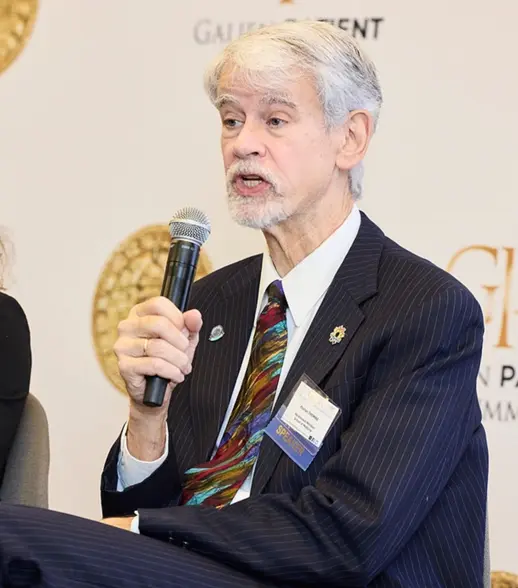
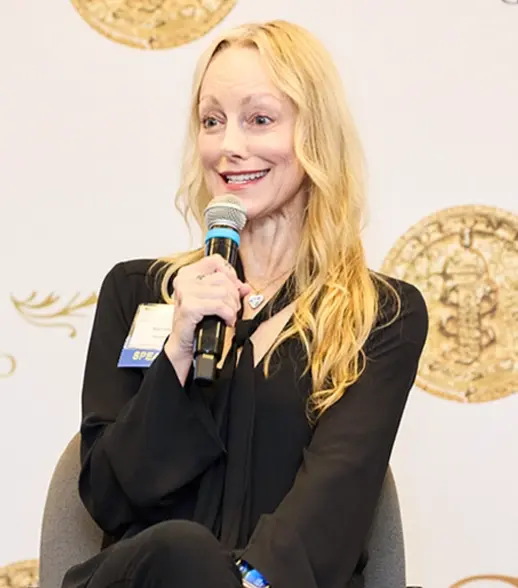
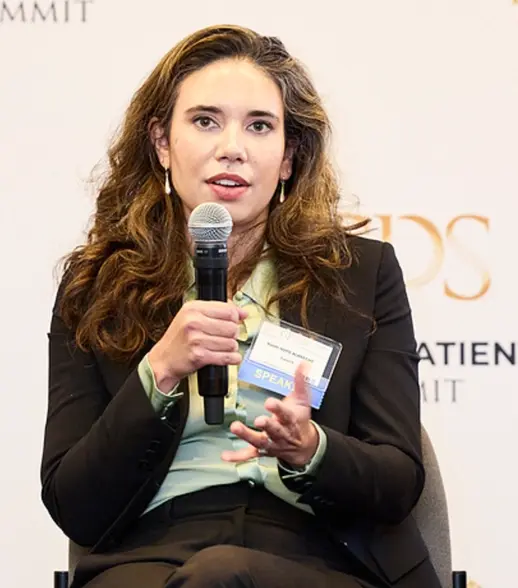
This example set the tone for the 2026 Galien Patient Summit (GPS) panel on Pricing, Access, & Equity through an ALS Lens. The session moderator, Thomas Lines, Founder, CEO, and Chairman of Quercis Pharma, was joined by Dr. Florian P. Thomas, Founding Chair of Neurology and Co-Director of the ALS Center at Hackensack University Medical Center; Yentli Soto Albrecht, Co-Founder of Cure C9 and MD-PhD candidate at the University of Pennsylvania; Sheri Strahl, President & CEO of the ALS Network; and Indu Navar, CEO and Founder of Everything ALS. Lines opened with the panel's guiding principle: "We shouldn't follow the money; we should follow the patient."
What ALS Does
ALS attacks the nerves that control the body's muscles, steadily weakening them, including those used to breathe, speak, and swallow. A small share of cases stems from inherited genes, but most appear with no family history and are likely triggered by several genetic and environmental factors acting together. “Over the last 30 years, we’ve identified a number of mutations in particular genes that have been linked to ALS, and some of these mutations give rise to specific treatments that only work for those mutations. Other treatments may be more general,” said Dr. Thomas.
In Canada, the annual cost of tofersen in the first year can exceed $425,000, with subsequent years costing nearly $370,000. “The sticker prices sound huge, and this is not only for tofersen but for many of our ALS therapies. We need to figure this out,” said Strahl.
However, she noted that patients don’t usually pay those amounts. “The reality is that what our ALS patients are paying is not the sticker price. There are copays, there’s coverage, and many of the companies establish programs to help with the financial burden,” Strahl said.
Despite financial assistance, pricing remains a significant roadblock for many patients trying to access these quality-of-life improving medications. Additionally, patients have little say in how prices are set.
The opening anecdote about two patients came from Soto Albrecht. She shared that End the Legacy, an organization supporting genetic carriers for ALS and frontotemporal dementia (FTD), created a video comparing the experiences of an ALS patient in Canada and one in Norway. Both patients have SOD1 ALS, but the Canadian patient has been on tofersen for nearly a decade. The Norwegian patient was denied access to tofersen and lost the use of her legs, now confined to a wheelchair. “Norway said tofersen didn’t meet its phase 3 clinical endpoints, and the price was not justified with the clinical data, so they were not going to pay for tofersen,” said Soto Albrecht.
The access gap for these treatments is prevalent around the globe. When ALS specialists prescribe expensive drugs like tofersen or edaravone, insurers often question whether the patient truly needs it. “ALS patients are dying at the same rate with a treatment that works in other places. This still happens all over the world,” said Soto Albrecht.
Navar suggested that the ALS community can learn from the spinal muscular atrophy (SMA) community’s work using patient experiences to challenge insurer decisions. “We don’t have to reinvent the wheel. What we learned from SMA is that if the same payer paid for one patient and not the other, it’s actually against the law. We can either fight it or we can get ahead and learn from the book of others,” Navar said.
Access Starts Long Before the Pharmacy
The panelists agreed that price isn’t the only issue preventing patients from accessing treatment. Another barrier is the availability of genetic testing. Tofersen only works for SOD1 ALS, so patients need to undergo genetic testing before they can access the medication. “Medication access is predicated on genetic testing. It’s not only pricing; we have to go all the way back into the diagnostic process. As we operationalize access, sometimes we’ve got to go way upstream,” said Strahl.
Getting diagnosed with ALS is a slow and difficult process. Because the early symptoms of the disease overlap with many other neurological conditions, many patients go years before receiving an accurate diagnosis. Navar’s own family experienced this.
Her husband, Peter, first had trouble with a weak foot in his 40s, and it took about two years to get an ALS diagnosis. By then, he barely qualified for a clinical trial that required him to fly to the Mayo Clinic every two weeks for basic muscle and breathing tests, even though the trip itself was dangerous for him. "Who wrote this stupid protocol? Do they actually know what ALS patients go through?" she asked.
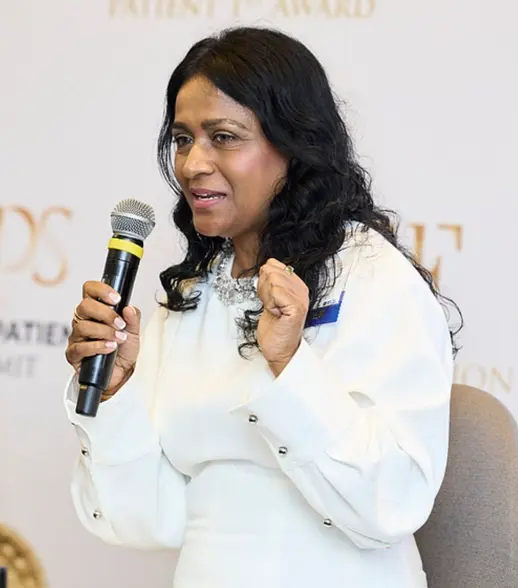
Peter died in August 2019. Navar, an engineer who once worked at NASA, started the Peter Cohen Foundation, which operates as Everything ALS, in his memory. "We've invented all this technology," she said. "Where is it?"
Everything ALS is developing a machine learning algorithm to track ALS progression using speech recordings and sensors. This would replace the zero-to-four scores doctors use to measure speech intelligibility and functional communication. The novel biometric tool is a “listener effort” prediction model trained to detect changes in speech as measures of disease progression. The algorithm is currently awaiting FDA review; if cleared, it would represent the first objective, scalable digital biomarker not only in ALS but in overall neurological disease research.
Research That's Hard to Reach
Soto Albrecht is a carrier of C9orf72, the most common gene linked to both ALS and frontotemporal dementia (FTD). Her father died of ALS, as did his sister, and her grandmother died of FTD. Soto Albrecht is finishing an MD-PhD; as she progressed through her training, she found the research system full of roadblocks. “I discovered that we don’t have as many therapies in the pipeline because we’re limiting ourselves by not giving the scientists and companies access to the material they need to develop treatments,” she said.
She illustrated this with her own personal example: Soto Albrecht tried to access her own and her father’s cells but faced significant delays. “It took 12 months of material transfer agreements, and that’s me accessing my own cells, banked in my own lab,” she said.
Families like Soto Albrecht’s often hear that new treatments are coming. "Many people are told, ‘Wait, we’re working on treatments for you.’ Even though we’ve seen many family members die over generations and over decades, and our odds of dying are the same as theirs were. You start eroding patient trust,” Soto Albrecht said. She also pointed out that drug companies get few financial incentives to target very rare adult forms of ALS, and she is working with another group on a lobbying effort to change that.
Strahl said nonprofits try to make small amounts of money go a long way in research. The ALS Network funds early tests of bold ideas so that larger investors can later turn them into treatments. In fact, tofersen itself came from an idea that other scientists set out to prove wrong. “There is no shortage of bright ideas. It's always about the resourcing and funding to make those bright ideas come to life,” Strahl said.
Looking Ahead
The panelists were hopeful about progress expected in the coming year. Their hopes included approval of ulefnersen, a new ASO treatment for another genetic form of ALS, shorter waits for diagnosis, and a stem cell bank that drug developers can buy from. Soto Albrecht is also helping design the first prevention trial for genetic ALS and FTD. "I think the gold standard for me is going to be prevention," she said.
Strahl closed with a challenge. "We've known about ALS for more than a century. It feels like an ethical imperative that we all come together to figure it out already. We’ve got to prioritize this; it should be part of our social contract,” she said.
A recording of the Pricing, Access, & Equity through an ALS Lens panel from the Galien Patient Summit is available here.