The Galien Foundation
medal
Join us

    The Galien Foundation
      Prix Galien Medal
      Join us
      Prix Galien Coin
      Join us
      Speaker-1
      right_logo_2

      Celebrating 20 years of breakthroughs that transformed medicine; envisioning the next 20 years of frontiers to be crossed

      GALIEN PATIENT SUMMIT 2026

      No Decision for Me Without Me:

      Embedding Patient Expertise at the Heart of Innovation

      Thursday October 29th
      New York Academy of Medicine
      7:30 AM - 5:30 PM
      New York City

      The Galien Patient Summit creates a collaborative platform where patient voices, experiences, and needs directly shape the future of medical research, drug development, and healthcare delivery. 

      For the second year, the Galien Patient Summit will take place concurrently with the annual Galien USA Forum - the premiere industry meeting of the minds on the future of human health.

      Co-Chairs

      Ken Frazier
      Michael Rosenblatt
      Philip Sharp
      Marc Tessier-Lavigne

      08:00
      OPENING CEREMONY
      Mask Group 381

      Prix Galien USA Awards

      in the categories
      • EcoHealth
      • Digital Health
      • Incubator / Accelerator / Equity
      • Startup
      Nominees Announcement in the category
      • MedTech
      PRESENTED BY:

      Ken Frazier, Prix Galien USA Committee Chair; Retired Chairman and Chief Executive Officer, Merck & Co., Inc.; Chairman, Health Assurance Initiatives, General Catalyst
      08:45 - 08:45

      The Patient-First Paradigm:
      How Patient Partnerships are Redefining and Bringing Value to Innovation  

      Chair
      Jeremy Abbate

      Patient First paradigm

      The next 20 years may demand not just smarter science, but the humility to admit how much we still don't know. Despite spectacular progress, we still can't cure metastatic cancer reliably, don't understand neurodegeneration's root causes, can't prevent autoimmune diseases, and struggle to explain the microbiome's role in health. Are we over-investing in targeted approaches while missing system-level insights? Will algorithms finally teach us what experiments couldn't, or must we wait for conceptual breakthroughs that no amount of data can substitute? Which current unknowns will become tomorrow's textbook basics and which will remain mysteries in 2046? Where do we need entirely new ways of thinking vs better tools?

      Chair

      Jeremy Abbate
      Vice President & Publisher, Scientific American

      David Fajgenbaum
      Co-Founder & President, Every Cure; Associate Professor of Medicine, University of Pennsylvania

      Kathy Giusti
      Founder, Multiple Myeloma Research Foundation; Author, Fatal to Fearless

      Cheryl Lubbert
      CEO & Co-Founder, Reverba Global

      Kate Sasser
      Chief Scientific Officer, Tempus AI

      09:55 - 10:50

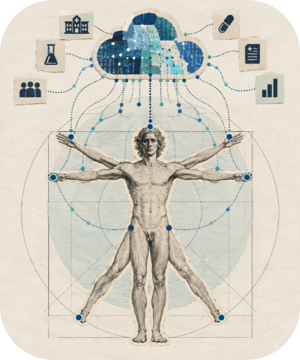
      The Future of Clinical Trials:
      Decentralized, Digital, and Designed with and for Patients 

      Chair
      Amy P. Abernethy
      Clinical_Trials

      The next 20 years may demand not just smarter science, but the humility to admit how much we still don't know. Despite spectacular progress, we still can't cure metastatic cancer reliably, don't understand neurodegeneration's root causes, can't prevent autoimmune diseases, and struggle to explain the microbiome's role in health. Are we over-investing in targeted approaches while missing system-level insights? Will algorithms finally teach us what experiments couldn't, or must we wait for conceptual breakthroughs that no amount of data can substitute? Which current unknowns will become tomorrow's textbook basics and which will remain mysteries in 2046? Where do we need entirely new ways of thinking vs better tools?

      Chair

      Amy P. Abernethy
      Co-Founder, Highlander Health; former Principal Deputy Commissioner, FDA 

      Michaela Dinboeck
      Head, Patient Engagement, Novartis

      Belen Fraile Ortiz
      Chief Data Science Officer, Innovative Research & Development, Johnson & Johnson

      Jan Geissler
      CEO & Founder, Patvocates

      11:05 - 12:00

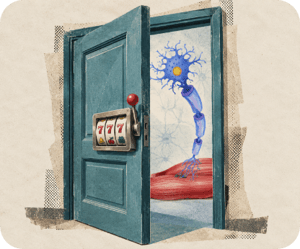
      Pricing, Access & Equity through an ALS Lens:
      Building Sustainable Innovation Patients Can Actually Access

      Chair
      Thomas Lines

      The next 20 years may demand not just smarter science, but the humility to admit how much we still don't know. Despite spectacular progress, we still can't cure metastatic cancer reliably, don't understand neurodegeneration's root causes, can't prevent autoimmune diseases, and struggle to explain the microbiome's role in health. Are we over-investing in targeted approaches while missing system-level insights? Will algorithms finally teach us what experiments couldn't, or must we wait for conceptual breakthroughs that no amount of data can substitute? Which current unknowns will become tomorrow's textbook basics and which will remain mysteries in 2046? Where do we need entirely new ways of thinking vs better tools?

      Chair

      Thomas Lines
      CEO & Chairman, Quercis Pharma

      Calaneet Balas
      President & CEO, The ALS Association

      Indu Navar
      CEO & Founder, Everything ALS

      Yentli Soto Albrecht
      Co-Founder, CureC9

      Sheri Strahl
      President & CEO, ALS Network  

      Joint Sessions with the Galien Forum
      Luncheon Debate

      The Science Trust Conundrum:
      When Society Doubts its Own Progress

      Chair
      Jeremy Levin
      In partnership: forum_loog

      Billions of people walk through their days protected from measles, mumps, and polio without a moment's thought; the vaccines worked so well we forgot why we needed them. This is the paradox of scientific success: the better it works, the more invisible it becomes, and the easier it is to doubt. Meanwhile, foundational research funding is contracting. The pipeline of serendipitous discovery (the stochastic process that eventually yields breakthroughs no one predicted) is narrowing. The consequences won't be visible for 10-15 years. By then, it's too late to course-correct. How does an industry that speaks in clinical endpoints and p-values make its case to a society increasingly skeptical of expertise? What's the role of scientists, industry leaders, and institutions in rebuilding trust, and where have our own behaviors contributed to its erosion?

      Chair

      Jeremy Levin
      Executive Chairman, Ovid Therapeutics; Former Chair, BIO

      Gil Bashe
      Chair of Global Health & Purpose, Finn Partners

      Julie Fleshman
      President & CEO, Pancreatic Cancer Action Network

      Margaret Hamburg
      Co-President, InterAcademy Partnership; Former Commissioner, FDA

      Vardit Ravitsky
      President, Hastings Center for Bioethics;
      Senior Lecturer on Global Health and Social Medicine, Harvard Medical School

      Keynote Address

      20 Years in 20 Minutes:
      A History & Lessons for the Next 2 Decades 

      Atul Gawande, Fish Chair in Surgery, Brigham and Women’s Hospital; Samuel O. Thier Professor of the Practice, Harvard Medical School; Distinguished Professor in Residence, Ariadne Labs

      The next 20 years may demand not just smarter science, but the humility to admit how much we still don't know. Despite spectacular progress, we still can't cure metastatic cancer reliably, don't understand neurodegeneration's root causes, can't prevent autoimmune diseases, and struggle to explain the microbiome's role in health. Are we over-investing in targeted approaches while missing system-level insights? Will algorithms finally teach us what experiments couldn't, or must we wait for conceptual breakthroughs that no amount of data can substitute? Which current unknowns will become tomorrow's textbook basics and which will remain mysteries in 2046? Where do we need entirely new ways of thinking vs better tools?

      13:30 - 14:25

      The Role of AI & Real-World Evidence in Regulatory Pathways and Speed to Market 

      Chair
      Becky Quick (TBC)
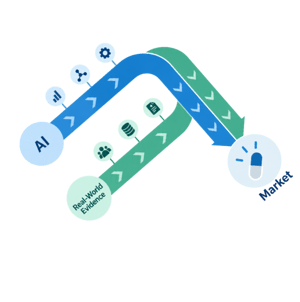
      AI_and_Real-world

      The next 20 years may demand not just smarter science, but the humility to admit how much we still don't know. Despite spectacular progress, we still can't cure metastatic cancer reliably, don't understand neurodegeneration's root causes, can't prevent autoimmune diseases, and struggle to explain the microbiome's role in health. Are we over-investing in targeted approaches while missing system-level insights? Will algorithms finally teach us what experiments couldn't, or must we wait for conceptual breakthroughs that no amount of data can substitute? Which current unknowns will become tomorrow's textbook basics and which will remain mysteries in 2046? Where do we need entirely new ways of thinking vs better tools?

      Chair

      Becky Quick
      Co-Anchor, CNBC Squawk Box (TBC) 

      Michael Boyle
      President & CEO, Cystic Fibrosis Foundation; Adjunct Professor of Medicine, Johns Hopkins School of Medicine

      Tara Frenkl
      SVP, Head of Global Medical Strategy & Integrated Evidence Generation, Bayer

      Daphne Koller
      CEO & Founder, insitro

      Janet Woodcock
      Former Principal Deputy Commissioner, USFDA and longtime Director, Center for Drug Evaluation and Research

      14:35 - 14:55
      INAUGURAL PRIZE
      Mask Group 381

      Inaugural Prix Galien Patient First Award Ceremony in Honor of Michael J. Fox

      PRESENTED BY:
      17:15 pm
      Forum 2026 closing